BioKinesiology & Course FAQ
If you have a question not answered here, please get in touch. Registered students can log in and access the course FAQ.
Questions asked about the BioKinesiology course
No prior knowledge of BioKinesiology is required for the BioKinesiology Diploma. It is specifically designed to take you from a beginner level to a fully qualified practitioner. We do require a basic Anatomy and Physiology qualification which can be obtained through doing a short class online. Please contact us if you would like details of this.
Yes, you need to have successfully completed the BioKinesiology Diploma, or have another kinesiology qualification that we recognise.
The BioKinesiology Diploma focuses on supporting the body back to health, using: muscle testing, nutrition, and it addresses common issues like gut health and detoxification. The Post-graduate BioKinesiology Diploma dives much deeper into complex biochemistry, such as methylation, hormones, and cellular respiration, for those looking to advance their clinical results.
Included in the cost are all the testing vial kits you need to practise, samples of vitamins and minerals, 8 weekends of in-person classes, six hours of online teaching, access to tutors for Q&A throughout the course, all materials for learning (in an online format), some printed charts and final exams.
Absolutely. You have access to instructors, and once a student are invited to a WhatsApp group chat.
In person classes are held once a month on Saturdays and Sundays from 9.30am – 4pm. We offer three convenient locations for our in-person training: Dublin, Kilkenny, and Monaghan. Additional online nutritional training for the BioKinesiology Diploma will take place on Monday evenings at 8pm for the first 6 weeks of the course.
In person classes are held once a month on Saturdays and Sundays from 9.30am – 4pm. These are held in Dublin.
Both the BioKinesiology Diploma and the Post-graduate BioKinesiology Diploma run for approximately 9 months, beginning in September and concluding with exams in May.
There is on-going assessment through-out the course, and at the end a practical and theory test is conducted. On successful completion you are awarded a ‘Diploma in BioKinesiology’.
For the BioKinesiology Diploma students, there is a 6-week online nutrition module (one hour per week) at the start of the course, on Mondays at 8pm. All other core modules for both courses are delivered in person to ensure hands-on mastery of techniques.
Student progress is measured through quizzes, assignments, case studies, and final exams.
To ensure every student receives personalised attention and feedback, we strictly limit our class sizes to a maximum of 15 people.
The course dates are provided in advance and are conducted on Saturday and Sunday, typically once a month. Each day is from 9am until 5pm.
The course is a combination of theory and practical application.
Classes are delivered through in person classes. Students can access materials anytime through our online learning platform.
The Post-graduate BioKinesiology Diploma focuses on understanding how to support our chronically ill clients to improve their health. We look at energy production, hormones, methylation, neurotransmitters, and other pathways in the body which may be preventing our clients' return to health. We look in more detail at the role that food and nutrition play in supporting these areas of the body.
Yes! Upon successful completion of the BioKinesiology Diploma you will be qualified to set
up your own clinic.
Successful graduates of our BioKinesiology Diploma are eligible to avail of professional
indemnity insurance, which is a requirement for practicing.
Yes. The BioKinesiology Diploma includes a specific module on "How to set up in business"
to help you transition from student to professional practitioner.
Student progress is measured through quizzes, assignments, case studies and final written
and practical exams.
Both courses consist of eight teaching weekends followed by a ninth weekend dedicated to
a practical and theory examination.
Yes. We welcome practitioners who have trained with other schools and wish to deepen their understanding of nutrition and biochemistry pathways through our Post-graduate BioKinesiology Diploma.
Since class sizes are limited to 15, you can register internest here to receive the latest enrolment dates and deposit information.
It is recommended that students have a computer with internet access to access course content. A tablet or smartphone would suffice, but because of the amount of content a bigger screen is recommended. It is recommended you have a printer to bring printed material to class for reading and note-taking.
In addition, all students need to have a plinth for practice, and to bring to class on rotation, approximately once every two weekends.
Absolutely. You have access to instructors, and once enrolled as a student you are invited to a WhatsApp group chat. Students are encouraged to meet up with classmates to practice between classes.
Once you are qualified you can join the BioKinesiology Association of Ireland or the Kinesiology Association in the UK – which support practitioners and give ongoing professional development training.
Yes, CPD training is organised by the Institute of BioKinesiology on new research and developments within the field of nutrition, health and wellness.
Asked by Interested Users of BioKinesiology
BioKinesiology is a complementary therapy that uses traditional kinesiology muscle
testing techniques to help understand the root cause of health conditions experienced
by clients. Clients are supported with nutritional and lifestyle interventions, to help them
heal.
BioKinesiology works with the body holistically, understanding that physical symptoms
may be related to emotional stress, lifestyle, dietary choices and nutritional deficiencies.
* BioKinesiology is not an alternative to medical treatment, and all clients are advised to
check in with their general practitioner or healthcare provider if feeling unwell.*
Not at all. It is a gentle, non-invasive process. The practitioner applies light pressure to
a specific muscle (usually your arm or leg) while you resist.
We can help with a wide range of issues, including:
- Digestive issues (bloating, IBS, food sensitivities).
- Low energy and fatigue.
- Symptoms of hormonal imbalances (PMS, thyroid issues, skin breakouts).
- Brain fog or low mood.
- Other hidden stressors that may affect the body such as infections and toxin
build-up.
We start with a detailed consultation about your health history. Then, you will lie fully
clothed on a treatment plinth for muscle testing.
Wear comfortable, loose-fitting clothing. Since we will be moving your arms and legs to test muscle responses, trousers or leggings are better than skirts or restrictive jeans. You will remain fully clothed throughout.
Allow 45 minutes – 1 hr for your appointment.
BioKinesiology is suitable for all ages – including children and babies.
No. Never stop prescribed medication without consulting your doctor.
Every “body” is different. Some clients feel a significant shift after one session, but for chronic or deep-seated issues, a course of 3 to 4 sessions spaced 4-5 weeks apart is usually recommended to allow the body to heal and detoxify.
Yes. Based on your treatment, your practitioner may recommend specific nutritional changes or natural supplements (like minerals or vitamins) to help correct the imbalances found during the session.
BioKinesiology is a complementary therapy. It works beautifully alongside conventional medicine, but it is not a replacement for a medical diagnosis. We focus on supporting the body’s natural biochemistry to help it function at its best.
BioKinesiology Blogs
Articles designed to inform, inspire, and gently deepen your understanding of BioKinesiology.

The Unsung Hero: Why Your Stomach is Key to True Good Health
When we talk about digestion, many of us picture the intestines diligently absorbing nutrients. But before any of that magic happens, there is an unsung hero quietly working behind the scenes: your stomach.
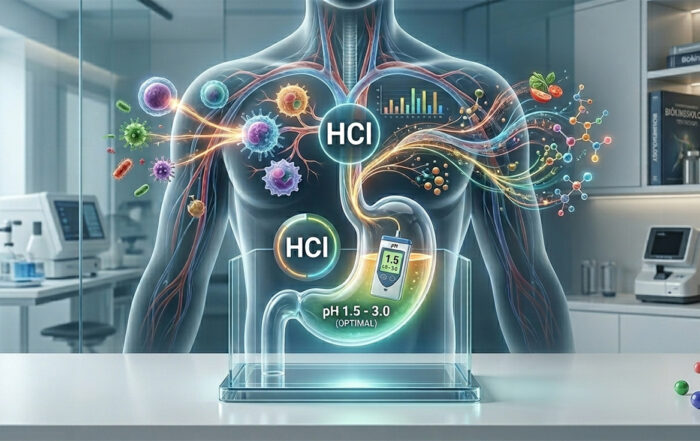
The Gut’s Golden Gatekeeper: Hydrochloric acid (HCl)
When we think of "stomach acid", we usually think of something to be neutralised. We’ve been conditioned by decades of commercials to view acid as a villain that causes heartburn and indigestion. But in the world of BioKinesiology we know the truth: Hydrochloric Acid (HCl) is the hero of your digestive story.

What Is Biokinesiology? A Simple Explanation
Biokinesiology is a holistic approach that looks at how the body responds to physical, emotional, and environmental stress — and how those stresses can be identified and addressed to support balance and wellbeing.