
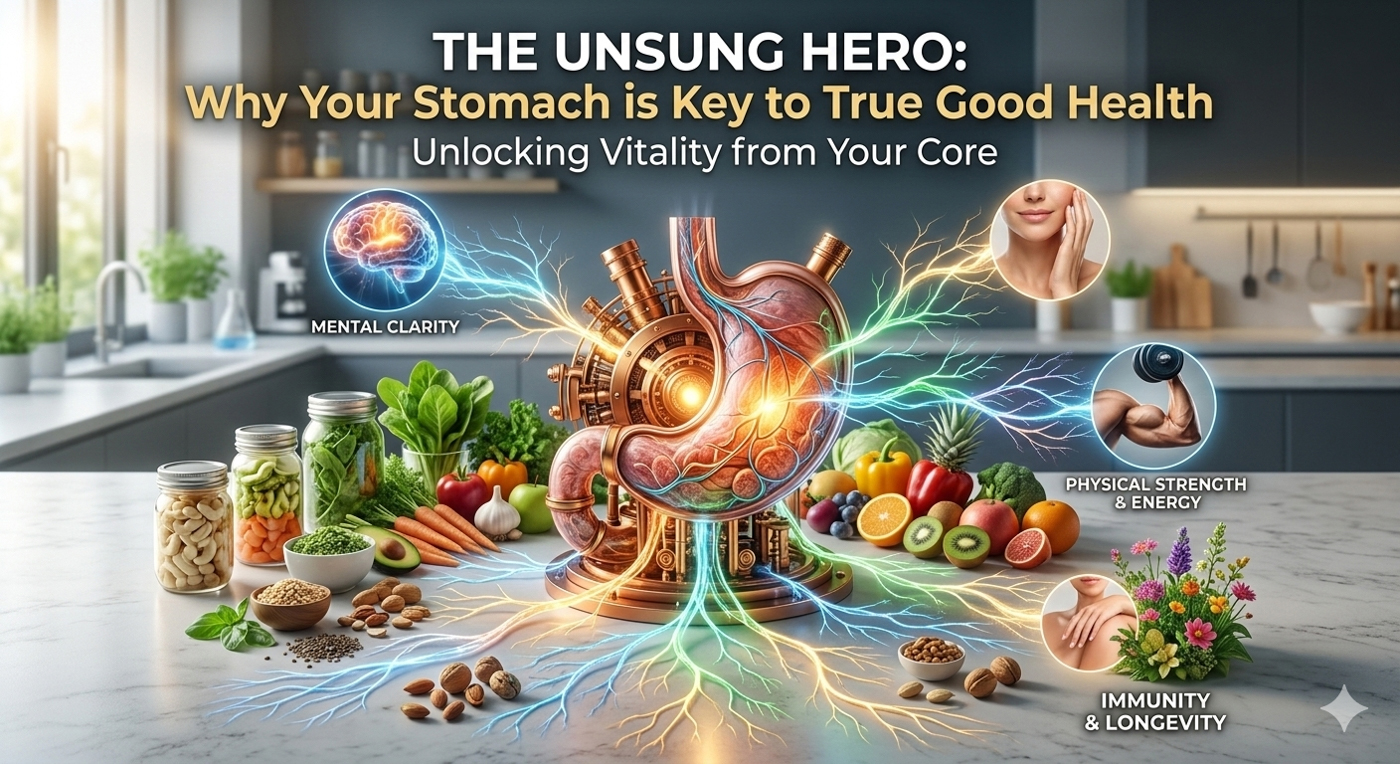
When we talk about digestion, many of us picture the intestines diligently absorbing nutrients. But before any of that magic happens, there is an unsung hero quietly working behind the scenes: your stomach.
Far from being just a simple holding tank, this remarkable organ is a powerhouse of biochemical activity. It is essential for breaking down food, absorbing vital nutrients, and even defending your body from invaders.
The Power of Hydrochloric Acid (HCl)
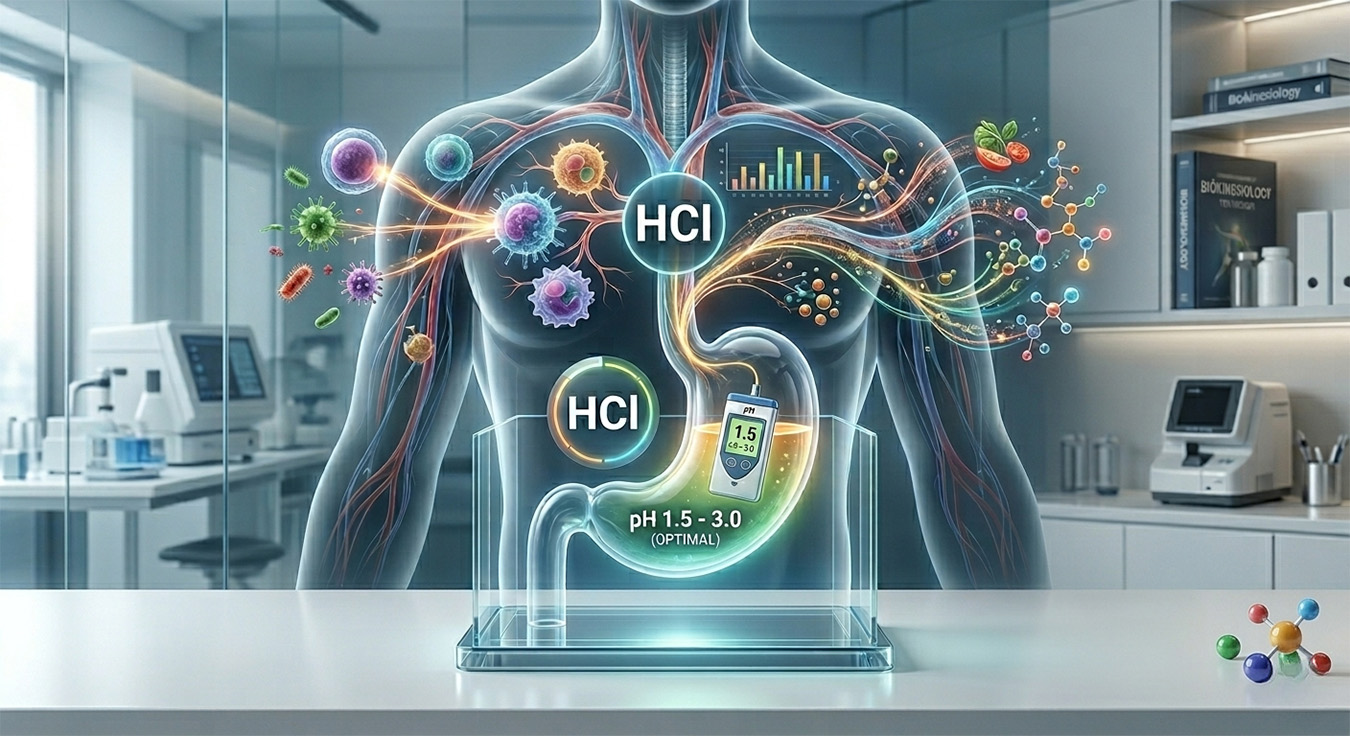
At the heart of the stomach’s incredible capability is hydrochloric acid (HCl). Often misunderstood, HCl is a crucial player – not just for digestion, but for your overall well-being. Its primary role is to create an intensely acidic environment, with a pH typically between 1 and 3 [1].
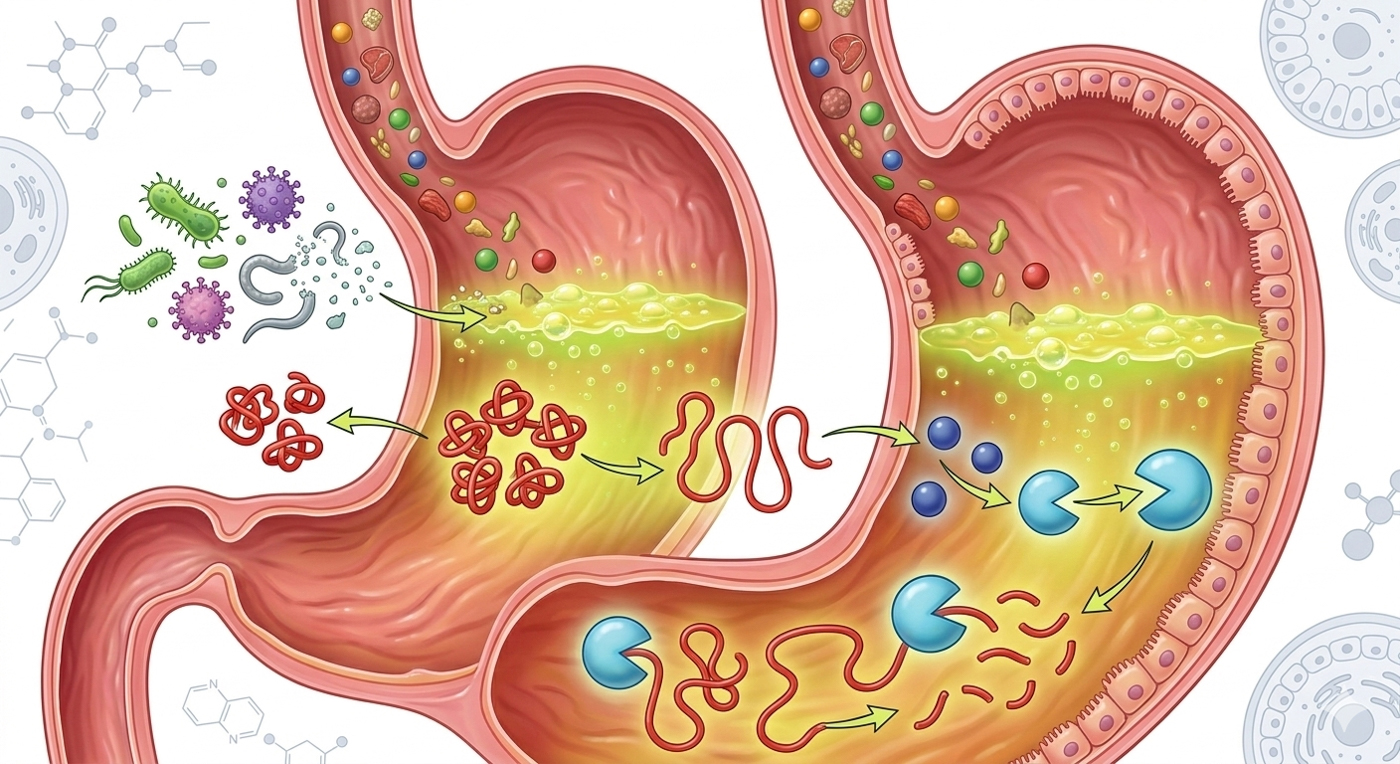
This extreme acidity serves multiple critical functions. It acts as your body’s first line of defence, annihilating harmful bacteria, viruses, and parasites that enter with your food [2]. Without sufficient HCl, your digestive tract becomes vulnerable, potentially leading to infections and imbalances in your gut microbiome.
Beyond defence, HCl is indispensable for protein digestion. It denatures proteins, essentially uncoiling them from their complex structures to make them accessible to digestive enzymes.
This brings us to pepsinogen; an inactive enzyme precursor also produced in the stomach. The highly acidic environment created by HCl is what activates pepsinogen, transforming it into its active form: pepsin.
Pepsin then goes to work, breaking down those denatured proteins into smaller peptide chains [3]. This is a crucial step before they move on to the small intestine for further breakdown and absorption. Without adequate HCl, pepsinogen cannot be properly activated, leading to incomplete protein digestion. This, in turn, can result in nutrient deficiencies and digestive discomfort.
The Vital Role of Intrinsic Factor
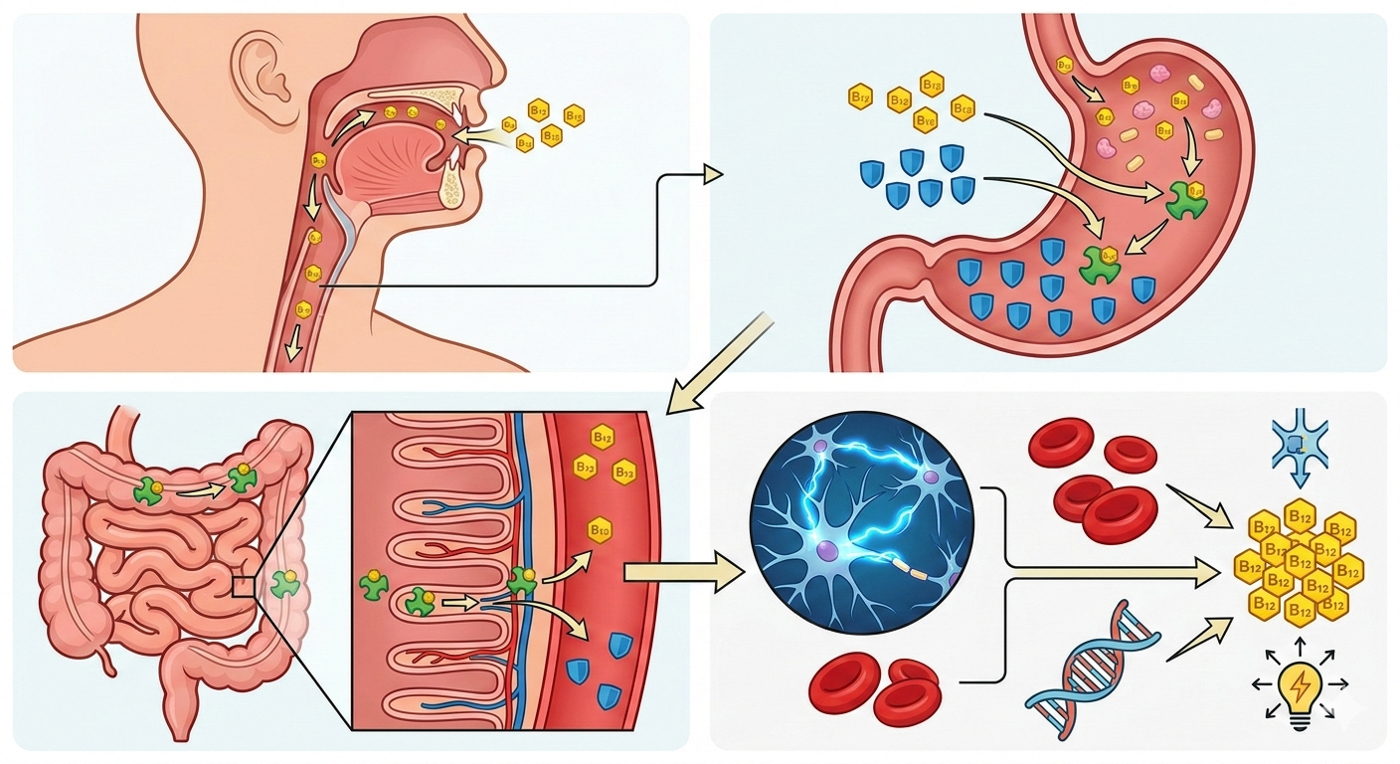
Another critical component produced by the stomach lining is Intrinsic Factor. This glycoprotein has a singular, yet profoundly important, job: to bind with Vitamin B12.
Vitamin B12 is a powerhouse nutrient, vital for nerve function, red blood cell formation, DNA synthesis, and energy production. However, it cannot be absorbed directly from food without first forming a complex with Intrinsic Factor.
This B12-Intrinsic Factor complex then travels to the small intestine, where it can finally be absorbed. If the stomach does not produce enough HCl, or if the cells responsible for Intrinsic Factor production are compromised, B12 absorption can be severely impaired, leading to fatigue, neurological issues, and even anaemia [4].
Rethinking Acid Reflux
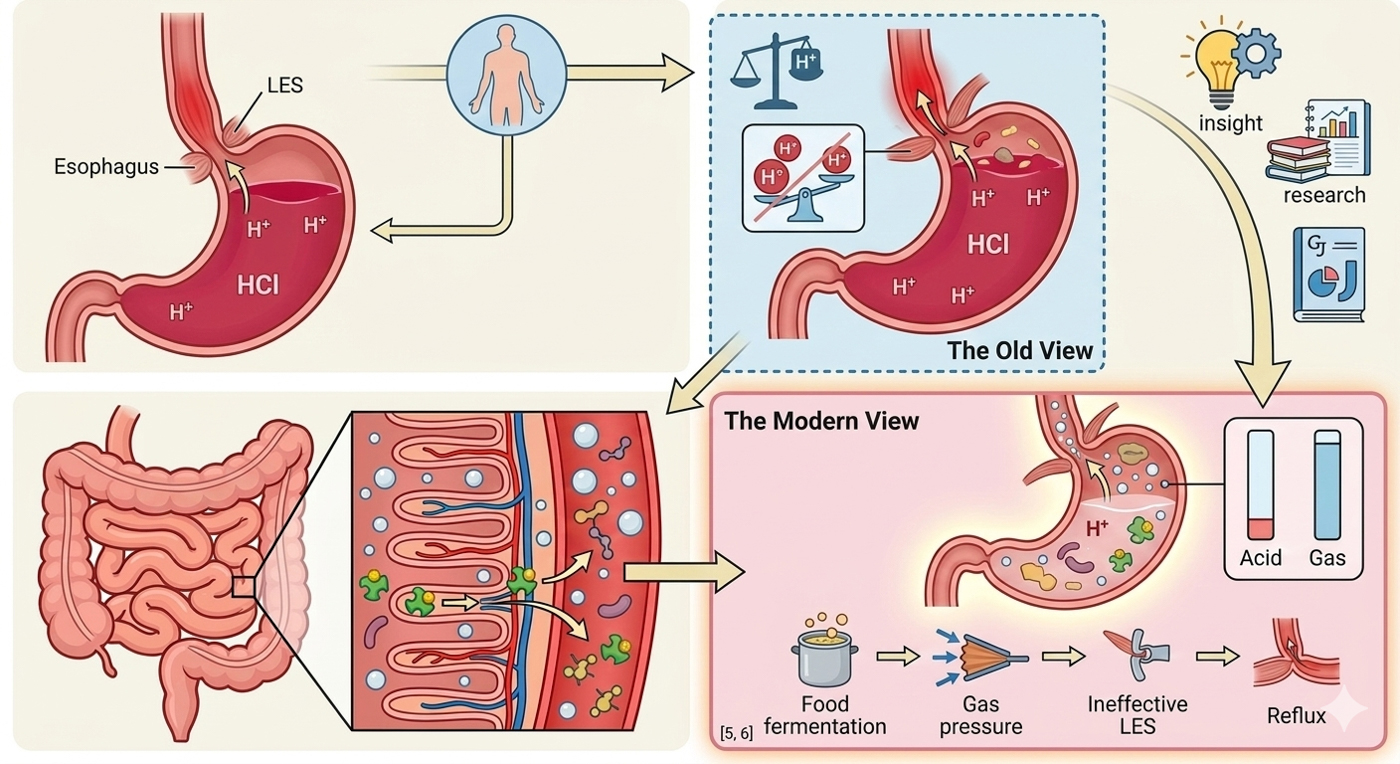
Perhaps one of the most surprising insights from modern research challenges a long-held belief about common digestive complaints. For years, reflux-type issues, such as heartburn and acid indigestion, have been attributed to having too much stomach acid.
However, a growing body of evidence – including studies published in gastroenterology journals – suggests the opposite may often be true: low stomach acid (hypochlorhydria) can actually be the underlying cause [5]. When stomach acid is too low, food does not break down properly.This leads to fermentation and gas production, creating pressure that can force the weak stomach acid up into the oesophagus, causing the burning sensation associated with reflux. The Lower Oesophageal Sphincter (LES) needs a strong acidic signal from the stomach to close tightly; if that signal is weak due to insufficient HCl, the sphincter may relax, allowing stomach contents to escape [6].
Supporting Optimal Stomach Function
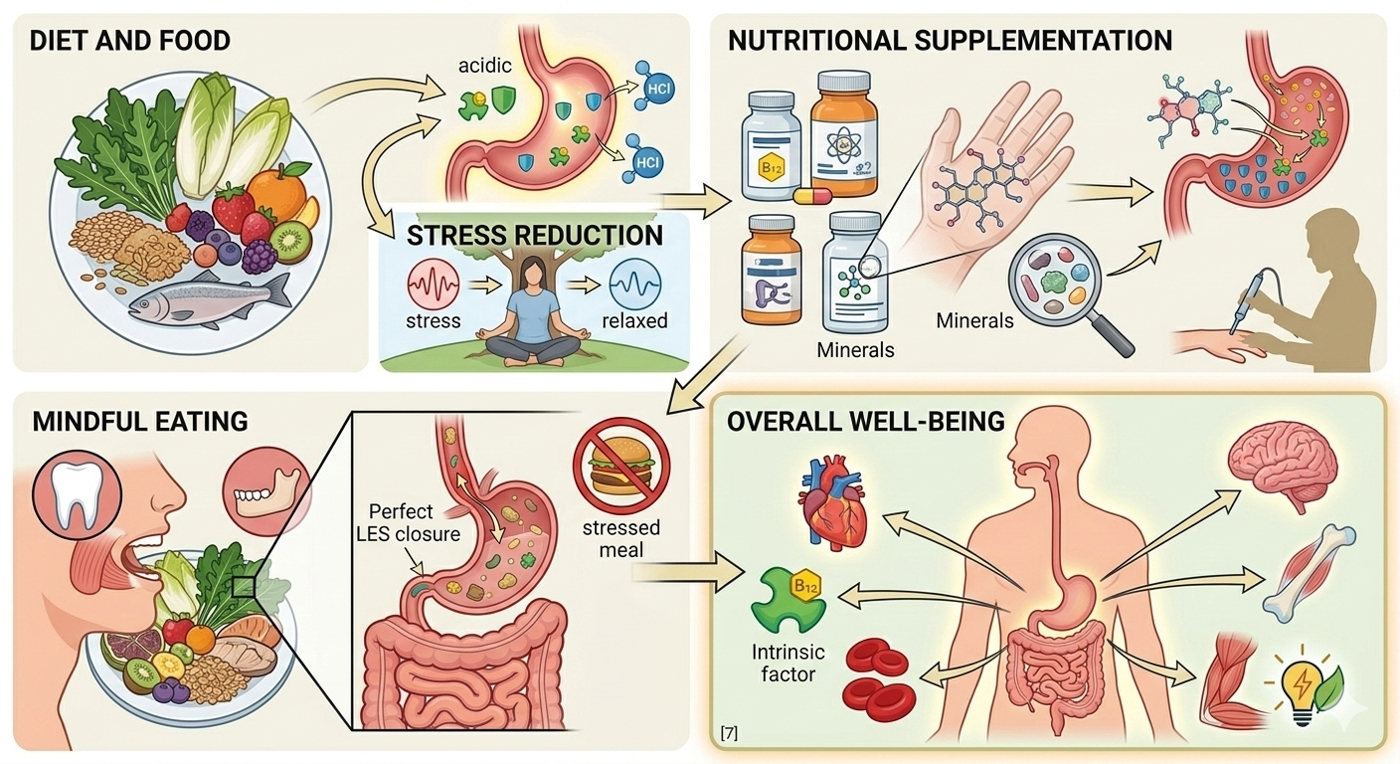
So, what can be done to support optimal stomach function? The good news is that diet and targeted nutritional supplementation can play a significant role. This is where BioKinesiology can help!
Prioritising whole, unprocessed foods – especially bitter greens before meals – can stimulate HCl production [7]. Avoiding excessive consumption of processed foods, refined sugars, and inflammatory fats can also reduce the burden on your digestive system.
For those with suspected low stomach acid, supplementation with specific coenzymes or minerals under the guidance of a BioKinesiologist can be highly effective. This approach helps in restoring proper acidity, improving protein digestion, and enhancing nutrient absorption.
Embracing mindful eating practices, chewing food thoroughly, and reducing stress around mealtimes also contribute to a healthier digestive environment.
By understanding and supporting the stomach’s vital roles, we can unlock a healthier digestive system and, in turn, a healthier body.
REFERENCES
1. Schubert, M. L., & Kaunitz, J. D. (2021). Gastric secretion. In Sleisenger and
Fordtran’s Gastrointestinal and Liver Disease. Elsevier.
2. Martinsen, T. C., Bergh, K., & Waldum, H. L. (2005). “Gastric juice: a barrier
against infectious diseases.” Basic & Clinical Pharmacology & Toxicology,
96(2), 94-102.
3. Guyton, A. C., & Hall, J. E. (2015). Textbook of Medical Physiology (13th
ed.). Saunders.
4. Hjelms, E., Thirup, P., & Schou, L. (1999). “Gastric intrinsic factor production
and vitamin B12 absorption.” European Journal of Cardio-Thoracic Surgery,
16(3), 273-275.
5. Wright, J. V., & Lenard, L. (2001). Why Stomach Acid Is Good for You:
Natural Relief from Heartburn, Indigestion, Reflux and GERD. M. Evans &
Company.
6. Kahrilas, P. J. (2008). “Gastroesophageal Reflux Disease.” New England
Journal of Medicine, 359, 1700-1707.
7. Mills, S., & Bone, K. (2000). Principles and Practice of Phytotherapy: Modern
Herbal Medicine. Churchill Livingstone.