
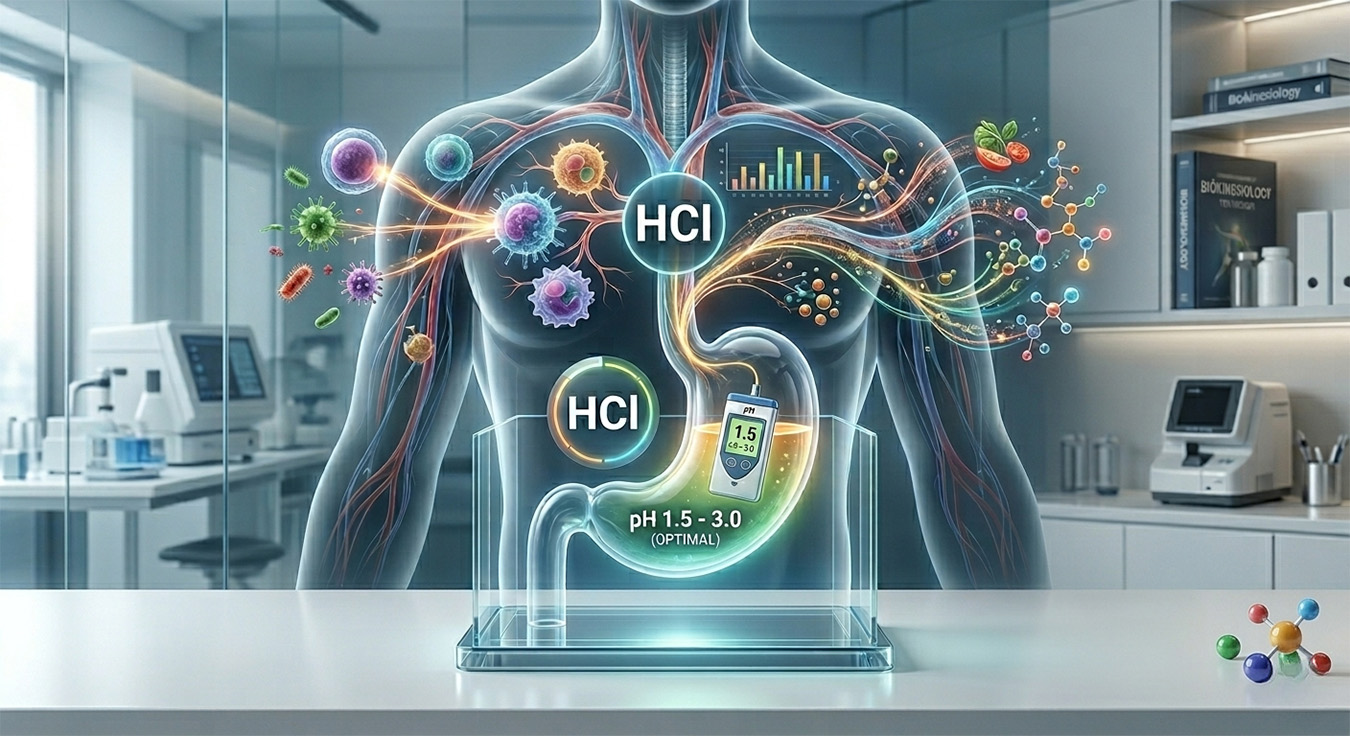
When we think of “stomach acid”, we usually think of something to be neutralised.
We’ve been conditioned by decades of commercials to view acid as a villain that
causes heartburn and indigestion. But in the world of BioKinesiology we know the
truth: Hydrochloric Acid (HCl) is the hero of your digestive story.
Maintaining an optimal level of HCl (typically a pH of 1.5 to 3.0) is not just about
avoiding a “tummy ache”; it is the foundation of your entire immune and nutritional
status.
The First Line of Defence
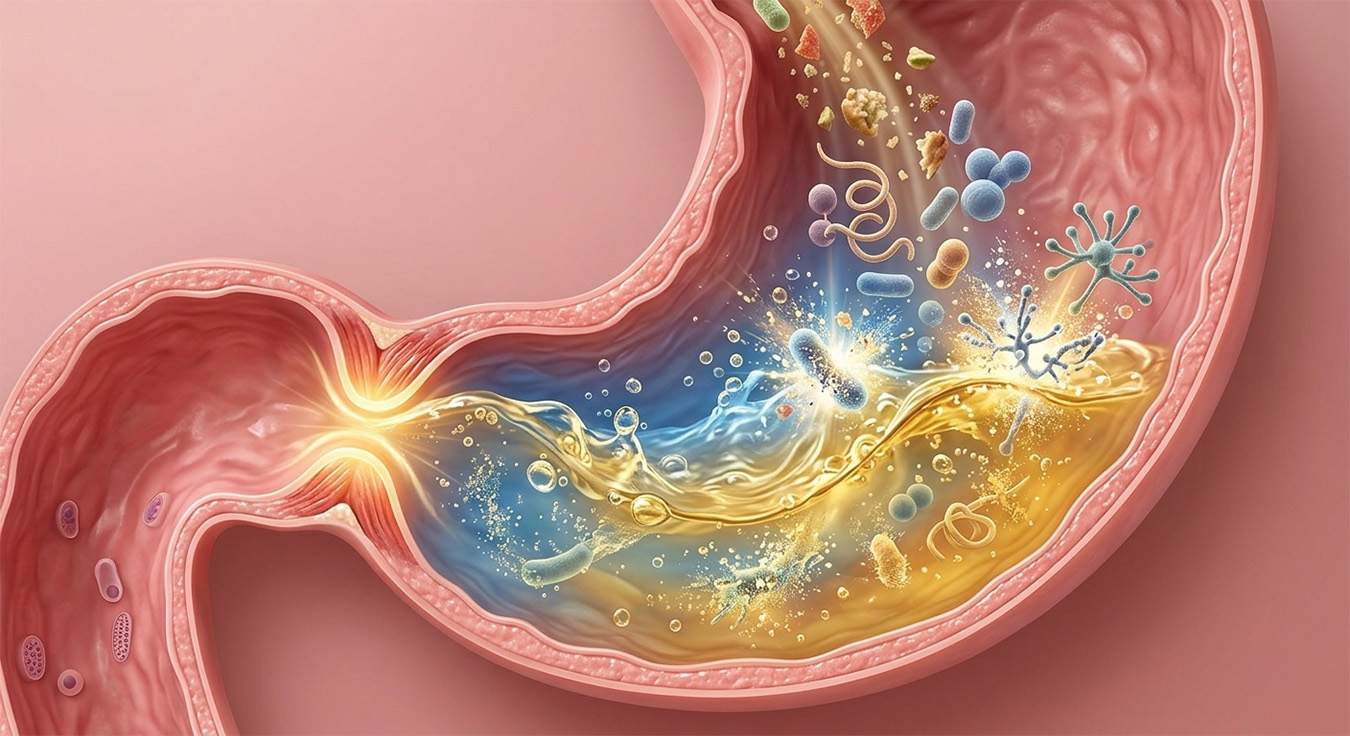
HCl acts as your body’s internal security guard. Its high acidity is designed to sterilise the food you eat, killing off harmful bacteria, parasites and fungi before they can reach your sensitive lower intestines.
Research published in The Journal of Clinical Biochemistry and Nutrition highlights that low gastric acidity (hypochlorhydria) can significantly increase the risk of bacterial overgrowth in the small intestine, commonly known as SIBO. Without that acid “bath”, you are essentially leaving the front door open to pathogens.
The Key to Nutrient Extraction
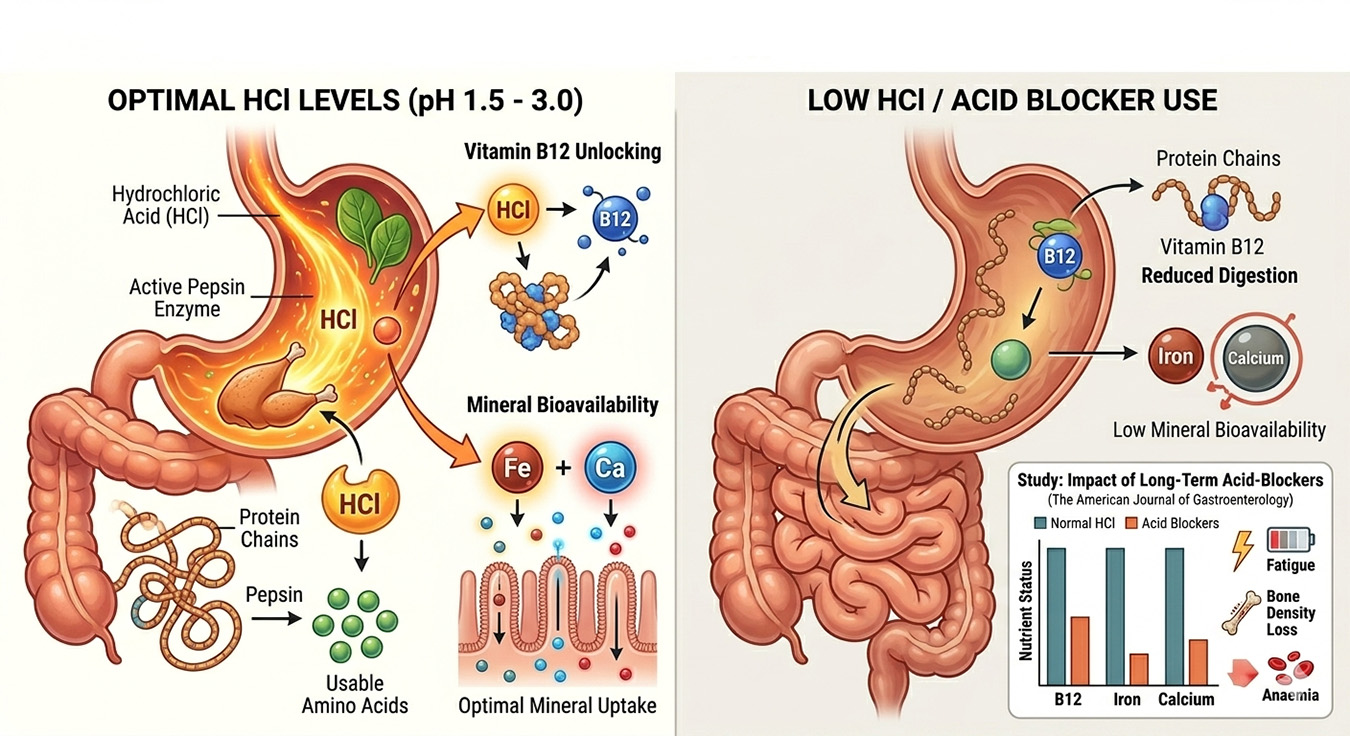
You aren’t just what you eat; you are what you absorb. HCl is the primary trigger for protein digestion. It activates pepsin, an enzyme that breaks down protein chains into usable amino acids.
Furthermore, HCl is required to “unlock” vital nutrients from
your food, including:
- Vitamin B12: Requires acid to be released from protein.
- Iron and Calcium: Both need an acidic environment to become “bioavailable” for your body to use.
A study in The American Journal of Gastroenterology notes that long-term use of
acid-blocking medications is linked to significant deficiencies in these minerals,
which can lead to fatigue, bone density loss, and anaemia.
The Heartburn Irony
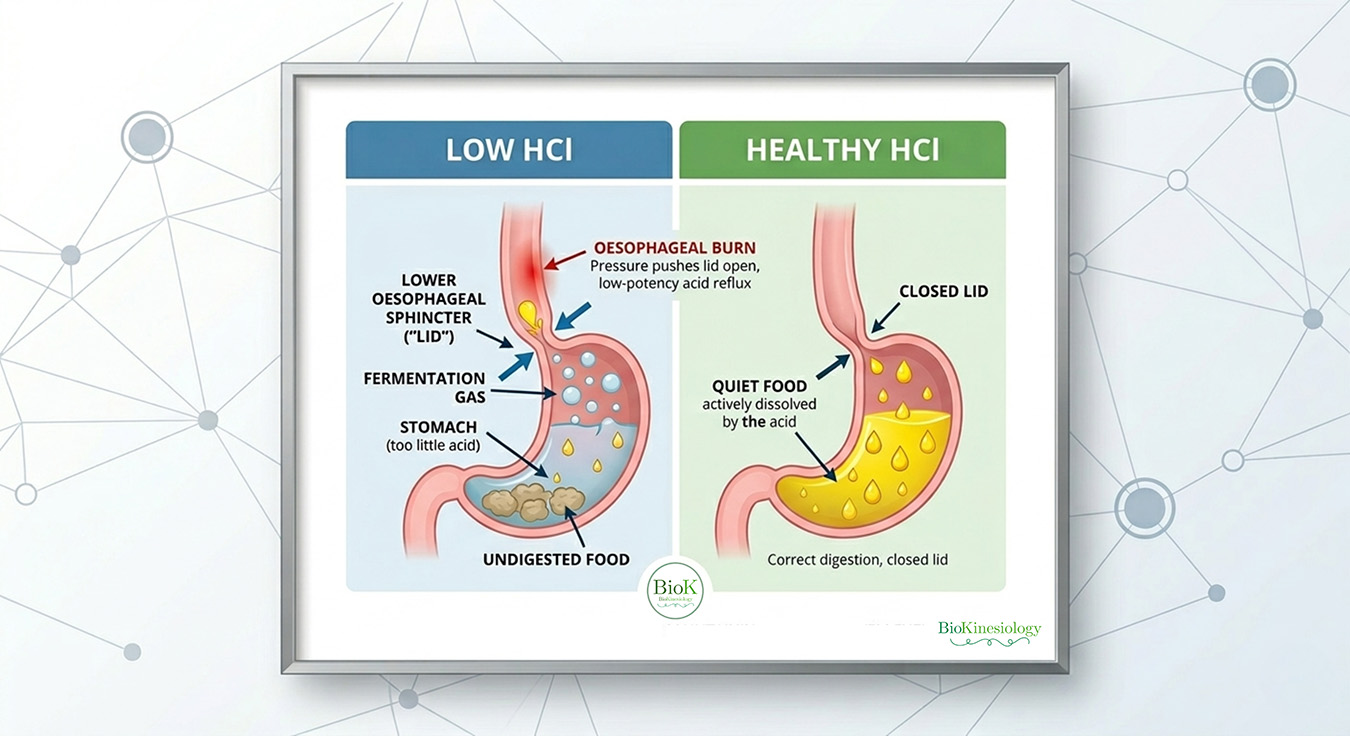
One of the most surprising things we find in BioKinesiology is that heartburn is often caused by too little acid, not too much. When your stomach acid is too low, food sits in the stomach and begins to ferment, producing gas. This pressure pushes the lower oesophageal sphincter (the “lid” of your stomach) open, allowing tiny splashes of acid into the oesophagus. Because the oesophagus isn’t protected like the stomach, even a tiny bit of low-potency acid feels like a burn.
Maintaining healthy HCl is a cornerstone of BioKinesiology because it ensures the
rest of your “interconnected system” has the fuel it needs to thrive.
References:
- Lombardo, L., et al. (2010). “Link between H2-receptor antagonists/proton
pump inhibitors and SIBO.” World Journal of Gastroenterology. - Heidelbaugh, J. J. (2013). “Proton pump inhibitors and risk of vitamin and mineral deficiency.” Therapeutic Advances in Drug Safety.